

1L HER2- GC/GEJC trial design
RATIONALE-305: A global, randomized, double-blind, placebo-controlled, phase 3 trial in nearly 1,000 patients with 1L unresectable or metastatic HER2- GC/GEJC1-3
Key eligibility criteria
- Histologically confirmed 1L GC/GEJC
- ECOG PS ≤1
- Mesurable or evaluable disease per RECIST v1.1
Key exclusion criteria
- HER2+ tumors
- Previous treatment for unresectable, locally advanced or metastatic GC/GEJC

R
1:1
(N=997)
TEVIMBRA
200 mg IV Q3W +
investigator-chosen
platinum- and fluoropyrimidine-based chemotherapy
Q3W (n=501)
Placebo IV Q3W +
investigator-chosen
platinum- and fluoropyrimidine-based chemotherapy
Q3W (n=496)
Treatment until disease progression, intolerable toxicity, or withdrawal for other reasons
Key outcomes
Key efficacy outcome:
- OS in patients with a PD-L1 score ≥1%*
Additional efficacy outcomes:
- PFS, ORR, DoR in patients with a PD-L1 score ≥1%*
Key secondary outcome:
- Safety in the all-comer population
Image description
Key eligibility criteria: Histologically confirmed 1: GC or GEJC and ECOG PS ≤1 within 7 days prior to randomization
Key exclusion criteria: HER2-positive tumors, and previous treatment for unresectable, locally advanced or metastatic GC or GEJC
997 patients randomized 1:1
Dosing: TEVIMBRA 200 mg IV Q3W + investigator-chosen platinum + fluoropyrimidine-containing chemotherapy (n=501). Placebo IV Q3W + investigator-chosen platinum + fluoropyrimidine-containing chemotherapy (n=496). Treatment until disease progression, intolerable toxicity, or withdrawal for other reasons.
Key efficacy outcome: OS in patients with a PD-L1 score ≥1% Additional efficacy outcomes: PFS, ORR, DOR in patients with a PD-L1 score ≥1%
Key secondary outcome: Safety in the all-comer population
Key efficacy analysis in patients with a PD-L1 score ≥1%*†: n=885
Safety analysis population: n=992
The patients of RATIONALE-305 were stratified by:
- Region of enrollment
- Peritoneal metastases (yes/no)
- Investigator-chosen chemotherapy
- PD-L1 score* (PD-L1 ≥5% vs <5%)
.
Leading Expert Discusses RATIONALE-305 Study Design
RATIONALE-305 featured a broad range of patients, including those with difficult-to-treat characteristics3
Nearly half of patients exhibited peritoneal metastases
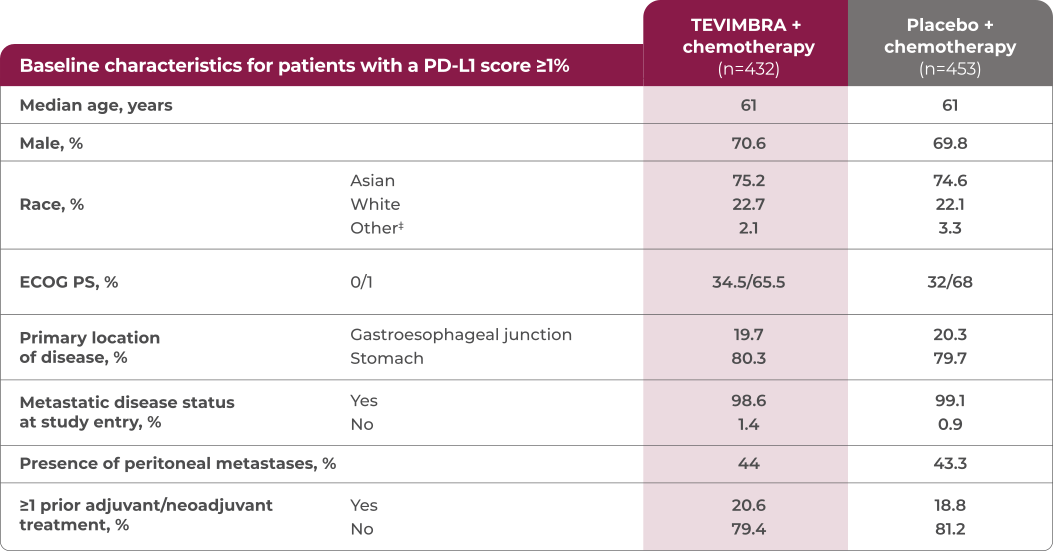
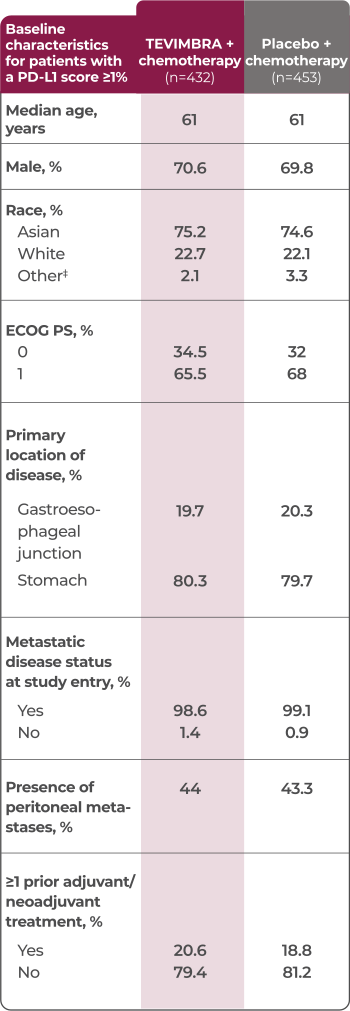
PD-L1 scores were measured in RATIONALE-305 using TAP, which demonstrated substantial concordance with CPS, with ~90% agreement3
You may use your preferred PD-L1 testing method to identify patients in clinical practice
Watch the video below to see how PD-L1 scores were tested for clinical trials with TEVIMBRA.
.
Leader in Oncology Discusses PD-L1 Testing (TAP vs CPS)
Frequently Asked Questions
How was TEVIMBRA studied in 1L HER2- advanced GC/GEJC?
RATIONALE-305 was a global, randomized, double-blind, placebo-controlled, phase 3 trial in nearly 1,000 patients with 1L, unresectable or metastatic, HER2- GC or GEJC. The key efficacy outcome was overall survival in patients with a PD-L1 score ≥1%.1,3
*PD-L1 scores were measured in RATIONALE-305 using TAP, which demonstrated substantial concordance with CPS, with ~90% agreement. You may use your preferred PD-L1 testing method to identify patients in clinical practice.3
†The key efficacy analysis was a retrospective subgroup analysis of RATIONALE-305 in patients with a PD-L1 score ≥1%. PD-L1–negative patients were excluded from this analysis population due to TEVIMBRA + chemotherapy being indicated in patients whose tumors expressed PD-L1 (≥1). Therefore, the efficacy data shared in this presentation do not reflect the all-comer population.3
‡The race subcategory “Other” included not reported, unknown, and other.3
References: 1. TEVIMBRA. Prescribing Information. BeOne Medicines USA, Inc.; 2026. 2. Qiu MZ, Oh DY, Kato K, et al; RATIONALE-305 Investigators. BMJ. 2024;385:e078876. doi:10.1136/bmj-2023-078876 3. Moehler M, Oh DY, Kato K, et al. Adv Ther. 2025;42(5):2248-2268. doi:10.1007/s12325-025-03133-7